

Prostate Cancer Treatment
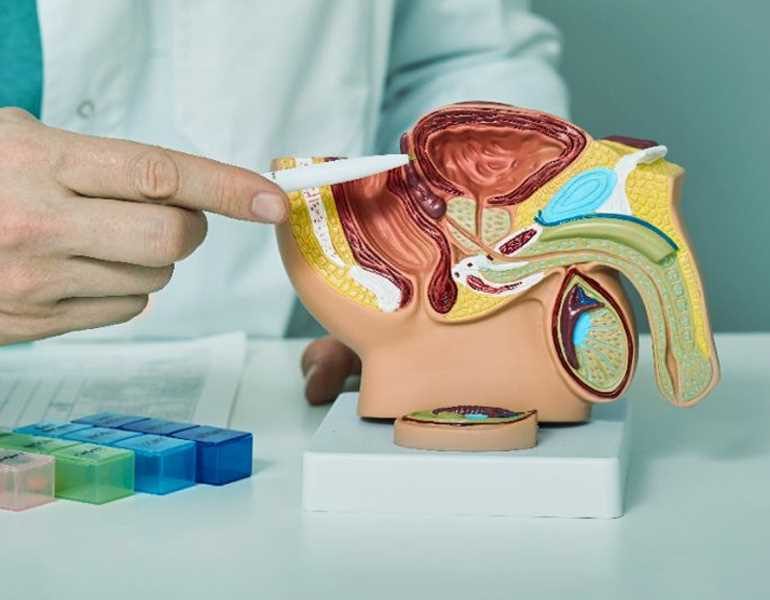
The prostate is a gland in the male reproductive system that produces a fluid that makes up part of semen. The prostate gland sits just below the bladder, is about the size of a walnut, and surrounds part of the urethra (the tube that empties urine from the bladder).
Is Prostate Cancer Dangerous?
Cancer is the result of abnormal cell growth, which makes it difficult for the body to work the way it should. Prostate cancer develops when abnormal cells form and grow in the prostate gland. Not all abnormal growths, also called tumors, are cancerous (malignant); some tumors are not cancerous (benign).
Prostate Tumors in Men:
Benign prostate growths, such as benign prostatic hyperplasia (BPH), are not life-threatening and do not spread to nearby tissues or to other parts of the body. After these growths are removed, they may slowly grow back, but they often do not.
Malignant prostate tumors, such as prostate cancer, can spread and invade nearby organs such as the rectum and bladder. When the abnormal growth is removed, the prostate cancer is cured, but it may grow back. Prostate cancer can be life-threatening if it spreads beyond the prostate.
The Difference Between Prostatitis and Prostate Cancer:
Prostate cancer and prostatitis are two conditions that can affect the prostate and may cause similar symptoms. However, they are different: prostatitis refers to painful inflammation of the prostate and the area around it, whereas prostate cancer occurs when cancer cells develop in the prostate.
The Difference Between an Enlarged Prostate and Prostate Cancer:
Both benign prostatic hyperplasia (BPH) and prostate cancer affect the prostate gland, causing it to enlarge. Benign prostatic hyperplasia means that it is not cancer and cannot spread, whereas prostate cancer spreads to other parts of the body.
Causes of Prostate Cancer in Men:
The risk of developing prostate cancer increases as men get older. The chance of being diagnosed with prostate cancer is greater after the age of 50. Prostate cancer is most often diagnosed in men in their sixties.
Having a family history of prostate cancer increases the risk of the disease. This risk is greater if a first-degree relative has been diagnosed. The more first-degree relatives who have had prostate cancer, the higher the risk.
The risk of prostate cancer also depends on the relative's age at diagnosis. If the relative was diagnosed with prostate cancer before the age of 65, the chance of developing prostate cancer is higher than if the relative was diagnosed at an older age.
Types of Prostate Cancer:
• Prostate adenocarcinoma: Forms in the gland cells that line the prostate and its ducts. This is the most common type of prostate cancer.
• Transitional cell carcinoma of the prostate: Begins in the cells that line the urethra; it usually starts in the bladder and spreads into the prostate.
• Squamous cell carcinoma of the prostate: Arises from the surface cells that cover the prostate, and grows and spreads faster than prostate adenocarcinoma.
• Small cell prostate cancer: Sometimes classified as a type of neuroendocrine cancer. It is known for its rapid growth and aggressiveness.
What Are the Symptoms of Prostate Cancer in Men?
The symptoms of malignant prostate cancer vary depending on how far the disease has progressed, so the signs of malignant prostate cancer differ. Early prostate symptoms include a weak urine flow or frequent urination. Prostate cancer symptoms in younger men are the same as those in older men. These and other signs and symptoms may be caused by prostate cancer or by other conditions. Therefore, you should seek medical advice if you have any of the following:
• Trouble starting the flow of urine.
• Frequent urination (especially at night).
• Trouble emptying the bladder completely.
• A weak or interrupted urine flow (stopping and starting).
Symptoms of Advanced Prostate Cancer:
Symptoms of late-stage prostate cancer include the symptoms mentioned above, in addition to pain in the back, hips, or pelvis that does not go away.
Symptoms of the final stages of prostate cancer may also include shortness of breath, severe fatigue, a rapid heartbeat, dizziness, or pale skin caused by anemia.
Other Conditions May Cause the Same Symptoms:
As men get older, the prostate may grow larger and block the urethra or bladder, causing difficulty urinating or sexual problems. This condition is called benign prostatic hyperplasia (BPH). Although it is not cancer, surgery may be needed. The symptoms of benign prostatic hyperplasia or other prostate problems may be similar to the symptoms of prostate cancer.
Prostate Tests:
At Warith International Cancer Institute, prostate tests are performed by the most skilled prostate cancer specialists in Iraq. The most important of these tests include:
• Physical exam and health history: An exam of the body to check general signs of health. A history of the patient's health habits and past illnesses and treatments is also taken.
• Digital rectal exam: Feeling the prostate through the wall of the rectum to check for lumps or abnormal areas. Enlarge
• Prostate test (PSA): This prostate cancer test measures the level of prostate-specific antigen in the blood, a substance made by the prostate that may be found in higher-than-normal amounts in the blood of men who have prostate cancer. PSA levels may also be high in men who have an infection or inflammation of the prostate or benign prostatic hyperplasia.
• PSMA PET-CT scan: An advanced imaging procedure, available at the best cancer treatment institute in Iraq, used to help find prostate cancer cells that have spread outside the prostate to the bones, lymph nodes, or other organs. In this procedure, a molecule that binds to a protein found on the surface of prostate cancer cells is injected. The scanner then reveals where prostate cancer cells are located in the body. The PSMA tracer is prepared at Warith International Cancer Institute from German raw materials. This tracer detects prostate tumors on the PET-CT scanner.
• Transrectal ultrasound: A procedure in which a probe is inserted into the rectum to examine the prostate. The probe is used to bounce high-energy sound waves off internal tissues or organs and make echoes. The echoes form detailed pictures of the prostate.
• Transrectal magnetic resonance imaging (MRI): A procedure that uses a strong magnet, radio waves, and a computer to make a series of detailed pictures of the prostate and nearby tissues. Transrectal MRI is done to find out whether the cancer has spread outside the prostate into nearby tissues.

Biopsy to Diagnose Prostate Cancer and Determine Its Grade:
A sample of the prostate is taken to diagnose prostate cancer. A transrectal biopsy is the removal of tissue from the prostate by inserting a thin needle through the rectum into the prostate. This procedure may be done using transrectal ultrasound or transrectal MRI to help guide where the tissue samples are taken. The tissue is examined under a microscope to look for cancer cells.
Sometimes the biopsy is done using a sample of tissue removed during a transurethral resection of the prostate (TURP) to treat benign prostatic hyperplasia. If cancer is found, its grade will be determined. The grade of the cancer describes how abnormal the cancer cells look under a microscope and how quickly the cancer is likely to grow and spread.
How Prostate Cancer Is Staged:
After prostate cancer has been diagnosed, Warith International Cancer Institute, the best cancer hospital in Iraq, performs tests to find out whether cancer cells have spread within the prostate or to other parts of the body. This is done to determine the stage of the disease. It is important to know the stage in order to plan treatment. The results of the tests used to diagnose prostate cancer are often also used to stage the disease, along with the following tests:
• CT scan: A procedure that makes a series of detailed pictures of areas inside the body, taken from different angles. The pictures are made by a computer linked to an X-ray machine. A dye may be injected into a vein or swallowed to help the organs or tissues show up more clearly. This procedure is also called computed tomography or a helical (spiral) CT scanner.
• Pelvic lymphadenectomy: A surgical procedure to remove the lymph nodes in the pelvis so they can be checked under a microscope for cancer cells.
• Seminal vesicle biopsy: The removal of fluid from the seminal vesicles (glands that make semen) using a needle, so the fluid can be checked under a microscope for cancer cells.
• Radionuclide scan: A procedure to check for cancer that has spread from the prostate to other parts of the body, such as the lymph nodes or bones. A radioactive substance is injected into a vein and travels through the bloodstream. The radioactive substance attaches to prostate cancer cells and is detected by a scanner. It shows up as a bright spot on the image in areas where there are many prostate cancer cells.
There Are Three Ways Cancer Spreads in the Body:
• Cancer spreads from where it began by growing into nearby areas through the tissue.
• Cancer spreads from where it began by getting into the lymph system and traveling through the lymph vessels to other parts of the body.
• Cancer spreads from where it began by getting into the blood and traveling through the blood vessels to other parts of the body.
What Are the Stages of Prostate Cancer?
Prostate cancer is staged according to how far the cancer has spread:
Stage I:
The cancer is found in the prostate only. It cannot be felt during a digital rectal exam and is found by needle biopsy.
Stage II:
The cancer is more advanced than in Stage I but has not spread outside the prostate. Stage II is divided into stages IIA, IIB, and IIC.
Stage III:
The cancer has spread from the prostate to the seminal vesicles or to nearby tissues or organs, such as the rectum, bladder, or pelvic wall. Stage III is divided into stages IIIA, IIIB, and IIIC.
Stage IV:
The cancer has spread to nearby lymph nodes. Stage IV is divided into stages IVA and IVB.
Can Prostate Cancer Be Cured in Iraq?
Warith International Cancer Institute offers the latest prostate cancer treatment after studying each case, at the best cancer treatment institute in Iraq. Certain factors affect the chance of recovery and the treatment options, including the following:
• The stage of the cancer.
• The patient's age.
• Whether the cancer is newly diagnosed or has recurred.
• Whether the patient has other health problems.
• The expected side effects of treatment.
• Past treatment for prostate cancer.
• The patient's wishes.
1- Active Surveillance:
Watchful waiting is closely monitoring a patient's condition without giving any treatment until signs or symptoms appear or change. Treatment is given to relieve symptoms and keep them under control.
In active surveillance, patients are checked with certain tests to see whether the cancer is growing. When the cancer begins to grow, treatment is given to cure the cancer.
Watchful waiting is used for older men who have no signs or symptoms or who have other medical conditions, and for men whose prostate cancer was found during a screening test.
2- Surgical Treatment of Prostate Cancer:
Patients who are in good health and whose tumor is in the prostate gland only may be treated with surgery to remove the tumor. The following types of surgery are used:
• Radical prostatectomy: A surgical procedure to remove the prostate, the tissue around it, the seminal vesicles, and nearby lymph nodes. The main types of radical prostatectomy include:
o Open radical prostatectomy: An incision is made in the lower abdomen or in the area between the anus and the scrotum.
o Laparoscopic radical prostatectomy: Several small incisions are made in the wall of the abdomen, and a laparoscope (a thin, tube-like instrument with a light and a lens for viewing) is inserted through one opening to guide the surgery. Surgical instruments are inserted through the other openings to perform the surgery.
Enlarge
• Pelvic lymphadenectomy: A surgical procedure to remove the lymph nodes in the pelvis; the tissue is checked under a microscope for cancer cells. If the lymph nodes contain cancer, the doctor will not remove the prostate and may recommend other treatment.
• Transurethral resection of the prostate (TURP): A surgical procedure to remove tissue from the prostate using a resectoscope (a thin, lighted tube with a cutting tool) inserted through the urethra. This procedure is done to treat benign prostatic hyperplasia and is sometimes done to relieve symptoms caused by a tumor before other cancer treatment is given. TURP may also be done in men whose tumor is in the prostate only and who cannot have a radical prostatectomy. Enlarge
In some cases, the nerves that control penile erection can be saved with nerve-sparing surgery. However, this may not be possible in men with large tumors or tumors that are very close to the nerves.
Side Effects of Surgical Treatment for Prostate Cancer:
• Erectile dysfunction.
• Leakage of urine from the bladder or stool from the rectum.
• Shortening of the penis (by 1 to 2 cm).
• Inguinal hernia (bulging of fat or part of the small intestine through weak muscles in the groin). Inguinal hernia may occur more often in men treated with radical prostatectomy than in men who have had some other types of prostate surgery, radiation therapy, or a prostate biopsy alone. It is most likely to occur within the first 2 years after radical prostatectomy.
3- Radiation Therapy for Prostate Cancer:
Radiation therapy for prostate cancer uses high-energy X-rays or other types of radiation to destroy the genetic material in cancer cells and thereby stop them from growing. The way radiation therapy is given depends on the type and stage of the cancer being treated. There are different types of radiation therapy:
• External beam radiotherapy uses a machine outside the body to send radiation toward the area of the body with cancer.
• Internal radiation therapy, also called localized radiotherapy or brachytherapy, uses a radioactive substance, cobalt (Co-60), sealed in needles, wires, or catheters that are placed directly into or near the cancer. In early-stage prostate cancer, radioactive seeds are placed in the prostate using needles inserted through the skin between the scrotum and the rectum. The placement of the radioactive seeds in the prostate is guided by images from transrectal ultrasound or computed tomography (CT). The needles are removed after the radioactive seeds are placed in the prostate.
Side Effects of Radiation Therapy for the Prostate:
Side effects of radiation therapy for prostate cancer include an increased risk of bladder cancer and/or gastrointestinal cancer. Radiation therapy can also cause erectile dysfunction and urinary problems, which may get worse with age.
4- Hormone Therapy for Prostate Cancer:
In prostate cancer, male sex hormones can cause prostate cancer to grow. Prostate cancer medications that lower testosterone, surgery, or prostate cancer injections of other hormones are used to reduce the amount of male hormones or block them from working. This is called androgen deprivation therapy (ADT).
Side Effects of Hormone Therapy for Prostate Cancer:
Side effects of hormone therapy for prostate cancer may occur because androgens affect many other organs besides the prostate. They include the following:
• Decreased sex drive.
• Erectile dysfunction.
• Hot flashes.
• Loss of bone density.
• Bone fractures.
• Loss of muscle mass and physical strength.
• Changes in blood fat levels.
• Insulin resistance.
• Weight gain.
• Mood swings.
• Fatigue and exhaustion.
• Gynecomastia (breast enlargement).
5- Chemotherapy for Prostate Cancer:
Chemotherapy is a cancer treatment that uses drugs to stop the growth of cancer cells, either by killing the cells or by stopping them from dividing. When chemotherapy is taken by mouth or injected into a vein or muscle, the drugs enter the bloodstream and reach cancer cells.
6- Targeted Therapy with Radioactive Lutetium PSMA:
The Nuclear Medicine Department at Warith International Cancer Institute in Iraq offers the latest prostate cancer treatment for patients with metastatic prostate cancer that is resistant to hormone therapy, radiation therapy, and chemotherapy: lutetium therapy. The radioactive substance is prepared in the Nuclear Medicine Department by outstanding experts and staff in cancer treatment in Iraq. The treatment relies on selective image guidance to target the tumor and its metastases.
Targeted therapies usually cause less harm to normal cells than chemotherapy or radiation therapy.
7- Cryotherapy for Tumors:
Cryotherapy uses a device to freeze and destroy prostate cancer cells. Ultrasound is used to find the area to be treated. Cryosurgery can cause erectile dysfunction and leakage of urine from the bladder or stool from the rectum.
8- Thermal Ablation Therapy (Microwave):
High-intensity focused ultrasound therapy is a treatment that uses ultrasound to destroy cancer cells. To treat prostate cancer, an endorectal probe is used to emit the sound waves.
Follow-Up Tests for Prostate Cancer:
Some of the prostate tests that were done to diagnose the cancer or to find out its stage may be repeated. Some tests are repeated to see how well the treatment is working. Decisions about whether to continue, change, or stop treatment may be based on the results of these tests. Some tests will continue to be done from time to time after treatment has ended. The results of these tests can show whether the cancer has come back.
Rising PSA After Prostatectomy:
The patient has the first follow-up PSA test one to three months after surgery. The PSA test is then done once every 6 to 12 months for about 5 years. When there is a high chance of the cancer coming back, the patient may need it once every 3 months. If PSA levels remain normal, PSA tests can be done once a year.
Many men who have surgical treatment for prostate cancer (radical prostatectomy) live their lives without their disease coming back. However, 20% to 40% of them will see a rise in prostate-specific antigen (PSA) levels within 10 years of the operation. PSA should be undetectable in the blood once the prostate has been removed, so elevated levels indicate that the cancer may have come back. This is usually treated by giving radiation to the prostate bed, the place where the prostate was before it was removed, which often succeeds in bringing PSA back to zero for years.
Early Detection of Prostate Cancer:
When prostate cancer is detected, treatment becomes easier. Two tests are available to help detect prostate cancer early. Using these two tests together is better than using either one alone:
1- The prostate-specific antigen (PSA) test is a blood test that measures prostate-specific antigen, a substance made by the prostate. The normal PSA level changes with age. Various prostate problems, including cancer, can cause higher levels of prostate-specific antigen. Sometimes people with prostate cancer have PSA levels that are not higher than normal. Therefore, the PSA test cannot diagnose cancer; it only indicates that there may be a problem with the prostate.
2- The digital rectal exam (DRE) is a physical exam of the prostate through the rectum to check for lumps or anything else that seems unusual.
• If you are at average risk of prostate cancer, consider getting tested starting at age 50.
• If you are at high risk and have a family history of prostate cancer, consider getting tested starting at age 45.
Prostate Cancer Prevention:
There is no sure way to prevent prostate cancer. However, you can reduce your risk of prostate cancer by making healthy choices, such as exercising and eating a healthy diet. In general, doctors recommend that men at average risk of prostate cancer do the following:
Choose a Healthy Diet:
Reducing the amount of fat you eat each day has other proven benefits, such as helping you control your weight. To cut down on daily fat, eat fewer fatty foods or choose low-fat varieties. For example, reduce the amount of fat you add to food while cooking, choose leaner cuts of meat, and choose low-fat or fat-free dairy products.
Fruits and vegetables are full of vitamins and nutrients that are thought to lower the risk of prostate cancer. Eating more fruits and vegetables also makes you feel full and reduces your intake of other foods, such as high-fat foods.
Maintain a Healthy Weight:
Men who are obese, with a body mass index (BMI) over 30, may be at increased risk of prostate cancer. If you are overweight or obese, try to lose weight by reducing the number of calories you eat each day and increasing the amount of exercise you do.
If you are at a healthy weight, try to maintain it by exercising on most days of the week and choosing a healthy diet that includes fruits and vegetables.
Finally, we would like to highlight the role of Warith International Cancer Institute in helping many prostate cancer patients. At this great institution, supported by the Imam Hussain Holy Shrine, you will meet the best doctors for prostate cancer treatment in Iraq.